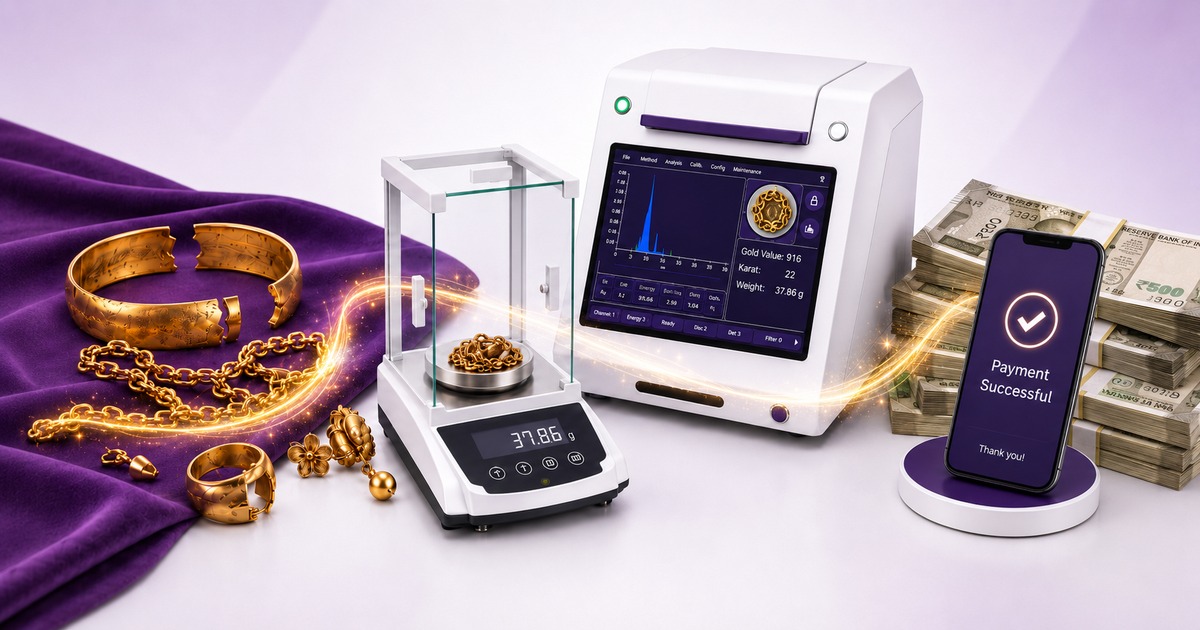
A broken
chain, A damaged bangle, One earring from a pair you no longer use, An old ring
sitting inside a locker.
Gold
jewellery does not have to look perfect to contain valuable gold.
If you
are searching for where to sell broken gold near me, sell broken gold
jewellery in Bangalore, or old gold jewellery buyers near me, one of
the biggest questions you probably have is:
"Will
I still get a good value for broken or damaged gold?"
The short
answer is: damage does not automatically make the gold worthless.
The value
of a gold item is primarily connected to factors such as its gold content,
purity, weight and the applicable buying rate.
Does Broken Gold Still Have Value?
Yes.
Gold is a
metal, and its value does not disappear simply because the jewellery is broken.
A chain
that has snapped is still made from gold.
A bangle
that has cracked may still contain the same gold.
An old
ornament that is no longer fashionable can still have significant metal value.
This is
why broken and unused gold should not automatically be treated as waste.
The more
useful question is:
How much
gold is actually present, and what is its purity?
What Types of Broken Gold Can You Sell?
Depending
on the buyer's policies, items commonly brought for evaluation can include:
- • Broken chains
- • Damaged bangles
- • Broken rings
- • Single earrings
- • Old necklaces
- • Damaged bracelets
- • Unused jewellery
- • Old gold ornaments
- • Gold scraps
- • Gold coins
The
condition of the item may affect how the transaction is handled, but it does
not mean the underlying gold has no value.
Does Broken Gold Get the Same Value as New Gold?
This
question needs a little more explanation.
The gold
itself does not become less pure merely because a chain has broken.
However,
your final payout depends on the actual valuation process.
For
example, the buyer may consider:
- • Gold purity
- • Total weight
- • Non-gold components
- • Applicable buying rate
- • Any applicable deductions
Therefore,
two pieces weighing exactly 10 grams may not receive the same valuation if
their purities differ.
A 22K
item and an 18K item contain different proportions of gold.
That
difference matters.
What About Gold Jewellery With Stones?
This is
especially important with jewellery containing:
- • Diamonds
- • Gemstones
- • Pearls
- • Beads
- • Other non-gold materials
The total
weight of the jewellery is not necessarily the same as the weight of gold
contained in it.
Ask the
buyer how the non-gold components are treated in the valuation.
A
transparent process should make this understandable before you accept the
offer.
Does Old Gold Lose Its Gold Value Because It Is
Old?
Not
simply because it is old.
Gold
jewellery can remain valuable for decades.
The style
may become outdated.
The clasp
may stop working.
The chain
may break.
The
ornament may no longer fit.
But the
gold itself can still be valuable.
This is
why many people keep old jewellery in lockers for years without realizing how
much stored value they have.
If you no
longer use it, getting it evaluated can tell you what it is worth today.
How Is Broken Gold Valued?
A
professional valuation generally starts with two important questions:
How much
does it weigh?
What is
its purity?
The
applicable gold rate is then used to arrive at the valuation according to the
buyer's purchasing methodology.
Step 1: Weigh the Gold
Your item
is weighed using a calibrated digital scale.
Step 2: Test Purity
The
composition of the gold is checked.
MK Gold
uses XRF testing as part of its stated valuation process and says the XRF test
takes approximately two minutes.
Step 3: Establish the Applicable Rate
Gold
rates change regularly.
Bangalore
gold-rate reporting currently tracks different rates for different purities,
including 18K, 22K and 24K.
Step 4: Calculate the Value
The buyer
uses the relevant weight, purity and rate to calculate the offer.
Step 5: Explain the Final Amount
This is
where transparency matters.
You
should understand how the final amount was reached.
Can You Sell Just One Broken Earring?
If the
buyer accepts such items, yes.
You don't
necessarily need to have a complete pair or a complete jewellery set to have
the gold evaluated.
If one
earring is missing its pair, it may still contain gold.
Rather
than leaving it unused in a drawer, you can have it assessed and decide whether
selling makes sense for you.
What About a Broken Chain?
A broken
chain can still contain the same gold material it contained before it broke.
The break
affects the jewellery's usability, not automatically the underlying gold
content.
If you
have an old chain that has been sitting unused because repairing it no longer
seems worthwhile, getting a valuation can help you decide whether to repair,
keep or sell it.
What About Old Gold That Is Blackened or Tarnished?
Appearance
alone is not a reliable way to determine the value of gold.
Gold
jewellery may develop surface changes due to alloys, dirt, chemicals, wear and
environmental exposure.
Instead
of judging the value by appearance, have the material professionally evaluated.
The
purpose of purity testing is to establish what the metal actually contains.
Should You Repair Broken Gold Before Selling It?
Usually,
you should first compare the economics.
If your
only objective is to sell the gold for its metal value, spending money on
repairs before selling may not necessarily improve your final outcome.
If the
jewellery has sentimental, antique or collectible value, however, repair or
independent appraisal may make sense.
Before
spending money on repairs, ask yourself:
Am I
selling this as jewellery, or am I selling it for its gold value?
That
distinction can change the decision.
How to Avoid Losing Value When Selling Broken Gold
1. Don't assume broken means worthless
The gold
may still have substantial value.
2. Check the current rate
Know the
approximate market environment before visiting a buyer.
3. Get the purity tested
Don't
rely only on the appearance or age of the item.
4. Watch the weighing
Make sure
the weight is clearly visible.
5. Ask about non-gold components
This is
particularly important for stone-studded jewellery.
6. Ask for a complete valuation
Understand
the rate, purity, weight and deductions.
7. Compare the final payout
Don't
compare only advertised rates.
Compare
what you will actually receive.
What Is the Difference Between Scrap Gold and Old Gold
Jewellery?
"Old
gold" generally refers to previously owned gold jewellery or other gold
items.
"Scrap
gold" can refer to gold-bearing material that is damaged, broken or no
longer intended to be used as jewellery.
From a
seller's perspective, the important issue is still the gold content and purity.
A
beautiful necklace and a broken piece of gold may look completely different,
but both can contain valuable gold.
Can You Sell Gold Without the Original Bill?
Requirements
differ between buyers.
MK Gold
currently states that it accepts a valid government-issued photo ID and that
original purchase receipts or hallmark certificates are not required for its
process.
It is
still advisable to confirm the current requirements before visiting.
How Quickly Can You Sell Broken Gold?
The
timeline depends on the buyer's process.
MK Gold
states that its weighing takes approximately five minutes, XRF testing
approximately two minutes and payment is immediate once the offer is accepted.
That
means a broken chain or old ornament does not necessarily require a lengthy
process simply because it is damaged.
When Should You Consider Selling Your Old Gold?
There is
no single answer that applies to everyone.
You may
consider selling if:
- • You haven't used the jewellery for years
- • The jewellery is damaged
- • You have no intention of repairing it
- • You have inherited jewellery you don't want to keep
- • You need liquidity
- • You want to consolidate unused gold
- • You want to understand the current value of your gold
The
decision should ultimately depend on your financial needs and the value you
place on the jewellery.
Don't Let Your Gold Sit Unused Forever
Many
people have old gold hidden away in lockers, drawers and cupboards.
Some
pieces are broken.
Some no
longer fit.
Some are
simply never worn.
But
unused does not mean worthless.
If you
want to know what your old or broken gold is worth, the first step is simple:
Get it
weighed. Get it tested. Understand the rate. Know the final value.
Why Transparent Testing Matters
When
selling broken gold, you may be tempted to accept the first number someone
gives you.
Don't ask how the number was calculated.
At MK
Gold, the stated process includes digital weighing, XRF purity testing and
immediate payment after acceptance.
That
gives the seller a clearer understanding of what is happening during the
transaction.
Frequently Asked Questions
Is broken gold worth anything?
Yes.
Broken jewellery can still contain valuable gold. Its condition does not
automatically eliminate the value of the gold.
Can I sell old gold jewellery?
Yes. Old
jewellery can be evaluated based on its weight, purity and applicable buying
rate.
Can I sell a single earring?
If the
buyer accepts it, a single earring can be evaluated for its gold content.
Does damaged gold have less purity?
Not
necessarily. Damage and purity are different things. Purity needs to be tested.
Should I repair broken jewellery before selling it?
Not
necessarily. If you are selling primarily for its gold value, compare the cost
of repair against the potential benefit before spending money.
How do I know if a gold buyer is trustworthy?
Look for
visible weighing, proper purity testing, a clear rate, transparent deductions,
a clear final payout and an established reputation.
Final Thought
Your gold
doesn't have to be beautiful to be valuable.
It
doesn't have to be new.
It
doesn't even have to be wearable.
Broken
gold is still gold.
If you
have old, damaged or unused jewellery sitting in a locker, don't guess its
value.
Get it
tested. Understand its purity. Check the rate. Know what it is worth.
Your
unused gold could be worth more than you think.