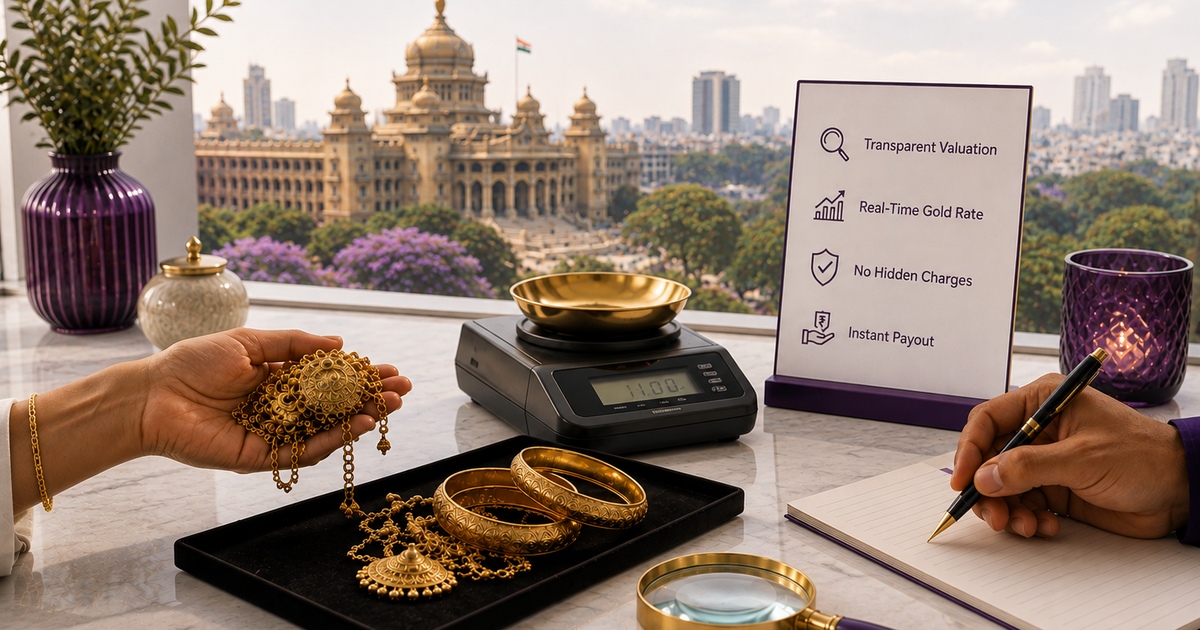
Selling gold jewellery is not the same as selling an ordinary household item.
A necklace may carry memories. A ring may have been inherited from a parent. A bangle may have been purchased for a special occasion years ago.
But when you decide to sell, the emotional story and the financial value are two different things.
The buyer needs to determine the value of the gold itself.
If you are searching for gold jewellery buyers in Bangalore, the most important thing is to choose a process that is transparent, easy to understand and based on proper testing.
What Determines the Value of Gold Jewellery?
Many people assume that an expensive piece of jewellery will automatically receive a high resale value.
That is not necessarily how gold buying works.
When jewellery is being sold, factors such as these become important:
• Gold purity
• Gold weight
• Current gold rate
• Non-gold components
• Applicable deductions
• Buyer's valuation policy
The original purchase price may include craftsmanship, design, making charges, brand value and other costs.
Those costs are not necessarily equivalent to the recoverable value of the gold itself.
That is why understanding the valuation process before selling is essential.
22K, 18K or 14K: Why Purity Matters
Gold jewellery is available in different purities.
For example:
• 24K represents very high-purity gold and is generally associated with investment-grade gold rather than everyday jewellery.
• 22K contains a high proportion of gold and is widely used for jewellery.
• 18K contains a lower proportion of gold and is commonly used where additional alloy strength is required.
• 14K contains a still lower proportion of gold.
As purity changes, the amount of pure gold contained within the same total weight changes.
That directly affects valuation.
This is why a 10-gram 22K item and a 10-gram 18K item should not automatically receive the same valuation.
Does the Design of Your Jewellery Affect Its Gold Value?
This is one of the most important things to understand before selling.
When you purchased your jewellery, you may have paid for:
• Design
• Craftsmanship
• Making charges
• Brand
• Finishing
• Stones or other decorative elements
When you sell the jewellery for its gold value, the valuation is primarily concerned with the gold content and purity.
Therefore, an elaborate necklace is not automatically worth more than a simple chain simply because it originally cost more.
The underlying gold content matters.
What About Diamonds and Other Stones?
Jewellery can contain diamonds, gemstones, pearls or other non-gold components.
These should be considered separately during valuation.
Ask the buyer:
"What weight is being considered for the gold valuation?"
This is particularly important for jewellery containing stones or other materials.
A transparent buyer should explain how the valuation is being calculated rather than simply presenting a final number.
Why Should Your Gold Be Tested Before You Sell?
A hallmark or stamp can provide useful information about a jewellery item's declared purity, but a professional valuation should still establish the actual composition used for the transaction.
This is where purity testing becomes important.
MK Gold states that it uses XRF testing as part of its gold valuation process. Its website describes the XRF test as taking approximately two minutes.
For the customer, the key question should be:
Can I understand and see how my gold is being evaluated?
What Is XRF Gold Testing?
XRF stands for X-ray fluorescence.
It is a non-destructive analytical technique used to determine the elemental composition of a material.
For gold jewellery, XRF equipment can be used to analyse the metal and help determine its composition.
One of the major advantages is that the jewellery does not need to be melted simply to perform the initial analysis.
For a customer selling valuable jewellery, a transparent testing process can make the experience much more reassuring.
How Does the Gold Jewellery Selling Process Work?
A professional gold buyer will generally follow a process similar to this:
1. Jewellery Inspection
The item is examined to understand what is being evaluated.
2. Weight Measurement
The jewellery is weighed using a digital scale.
3. Purity Testing
The gold composition is checked using an appropriate testing method.
4. Rate Verification
The applicable gold buying rate is established.
5. Valuation
Weight, purity and rate are used to determine the value.
6. Offer
The customer receives the amount being offered.
7. Payment
If the customer accepts the offer, payment is completed according to the buyer's process.
MK Gold states that its weighing process takes approximately five minutes, XRF testing approximately two minutes, and payment is immediate after acceptance of the offer.
How Can You Choose the Best Gold Jewellery Buyer in Bangalore?
Don't choose a buyer simply because an advertisement says "best price."
Instead, look for evidence of a transparent process.
Look for a clear rate
Ask what rate is being used for the valuation.
Look for visible weighing
You should be able to see your jewellery being weighed.
Look for proper purity testing
Ask what testing method is being used.
Ask about deductions
If deductions apply, ask what they are and why.
Ask about payment timing
Find out whether payment is immediate or whether you have to wait.
Check the company's reputation
Look for experience, customer feedback, certifications and an established physical presence.
MK Gold states that it has been buying gold since 2014 and is ISO 9001:2015 certified. The company also states that it has served more than 10,000 customers across Karnataka.
Should You Sell Antique or Inherited Jewellery?
Yes, you can have inherited or antique gold jewellery evaluated.
But there is an important distinction.
Some jewellery may have historical, artistic or sentimental value beyond its gold content.
If the piece has significant antique or collectible value, you may want to obtain an independent assessment before selling it purely for its metal value.
If your objective is simply to unlock the gold value, then purity and weight become the primary considerations.
What If Your Jewellery Is Old?
Old does not mean worthless.
Gold itself does not become "old" in the same way that many consumer products do.
A jewellery piece may be decades old and still contain valuable gold.
The important questions are:
What is its weight?
What is its purity?
What is the applicable gold buying rate?
That is why unused jewellery sitting inside a locker can represent significant stored value.
What Documents Do You Need?
Documentation requirements vary between buyers.
MK Gold currently states that customers can bring one valid government-issued photo ID, including Aadhaar, PAN, Passport, Voter ID or Driving License. Its website also states that original purchase receipts and hallmark certificates are not required for its process.
Always confirm the current requirements before visiting.
Should You Check the Gold Rate Before Selling?
Absolutely, Gold prices change regularly, and Bangalore gold-rate pages currently publish separate rates for different purities such as 18K, 22K and 24K.
Knowing the current rate helps you ask better questions.
However, don't assume that multiplying the headline 24K rate by your jewellery's weight will equal your final payout.
Your jewellery's purity and the buyer's valuation methodology must also be considered.
Five Questions to Ask Before Selling Your Jewellery
Before handing over your gold, ask:
1. What purity did you find?
2. What weight are you considering?
3. What gold rate are you using?
4. Are there any deductions?
5. What is the final amount I will receive?
If the answers are clear, you can make a much more informed decision.
Gold Jewellery Selling: Don't Let Sentiment Create Confusion
Your jewellery may have emotional value.
But if you have already decided to sell it, separate the emotional decision from the financial transaction.
You should know exactly what you are being paid for.
The purpose of a professional gold buyer is not simply to tell you a number.
It is to provide a transparent valuation that allows you to understand where that number came from.
Why Transparency Matters at MK Gold
MK Gold positions its gold-buying process around transparent weighing, XRF purity testing and immediate payment.
The company's current website states that its valuation process is designed to be completed quickly and that customers can walk in without an appointment.
For someone selling valuable jewellery, that transparency can make the difference between simply completing a transaction and actually feeling confident about it.
Frequently Asked Questions
What is the best place to sell gold jewellery in Bangalore?
The best buyer is not necessarily the one advertising the highest number. Look for transparent purity testing, visible weighing, a clear rate, straightforward deductions and reliable payment.
Can I sell old gold jewellery?
Yes. Old jewellery can be evaluated based on its gold content and purity.
Can I sell broken jewellery?
Yes. Broken jewellery can still contain valuable gold. Its condition does not automatically eliminate its gold value.
Does hallmarking determine my final selling price?
The selling valuation depends on the actual factors used by the buyer, including purity, weight and the applicable rate. A proper testing process can help establish the purity being used for valuation.
Should I sell jewellery with diamonds?
If your jewellery contains diamonds or valuable gemstones, understand separately how those stones and the gold are being valued before accepting an offer.
Final Checklist
Before selling gold jewellery in Bangalore:
• Check the current gold rate
• Know the approximate weight
• Ask for a purity test
• Watch the weighing process
• Ask about stones and non-gold components
• Ask about deductions
• Confirm the final payout
• Understand the payment process
• Carry the required identification
Selling gold should not feel mysterious.
Know the weight. Know the purity. Know the rate. Know your final value.
That's what transparent gold selling should look like.